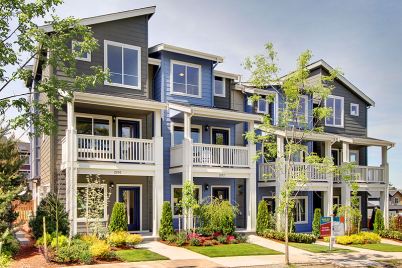
Once in a while I like to have a look around and see what’s on the market in a totally off-the-wall market segment that I have absolutely no personal interest in ever owning. Today that segment is townhomes in the city of Seattle.
As I browse around at what’s for sale in Seattle’s townhome market, a few questions come to mind: Why would someone have built these monstrocities, and why would anyone buy one of these eyesores?
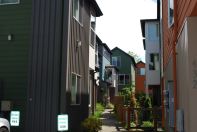
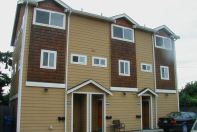
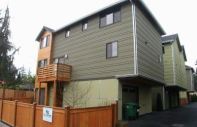
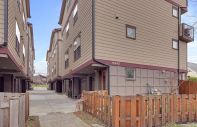
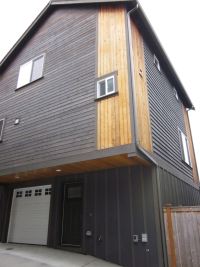
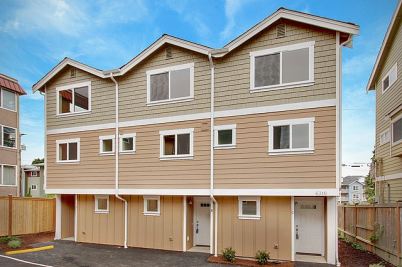
Seriously, look at some of the absolutely architecturally bleak townhouse inventory around Seattle:
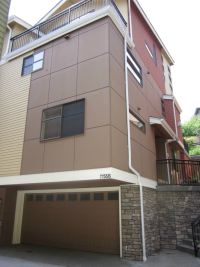
Why? Why do these exist? How can there possibly be demand for such souless shells?
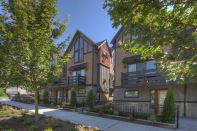
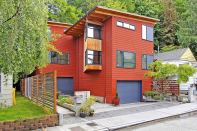
As I scanned through the listings trying to find some examples of townhouses with even a modicum of curb appeal, I was able to find a few:
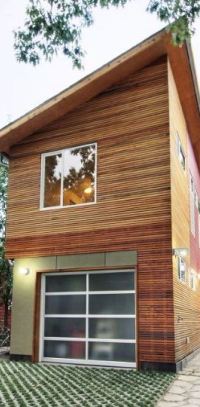
That’s four listings. Out of about three hundred and fifty. Pitiful!
I realize that “Seattle’s townhomes are butt-ugly” is a tired topic, so let’s take this in a different direction. Let’s talk about longevity.
In some of Seattle’s older neighborhoods there are homes still standing that were built 90+ years ago. Somehow I have a hard time imagining most of these things lasting that long, both due to the low quality of construction and the complete lack of visual appeal and usability (making 10-point turns to get into your garage and trudging up a flight of stairs just to get to your living room gets old fast).
What about you? How long do you think most of these cheap, opportunistic bubble boxes will last?


Bonus! Czech sky in the lower-right townhouse in the “ugly” set.
Rate this comment:
0
0
About 30 years + or – is my guess. But since they’re zoned multi-family they’ll be replaced with something else butt ugly by 2040 standards in 30 years. Its hard to do dense housing right I think.
(PS If someone has a suggestion for my open thread question about the ethical dilemma/technical ways for breaking a refi lock I’d appreciate it. Thanks.)
Rate this comment:
0
0
By Tim McB @ 2:
I don’t know, San Francisco seems to have done a pretty good job, and they’re way more dense than Seattle: http://www.google.com/search?tbm=isch&q=san+francisco+rowhomes
Rate this comment:
0
0
Sure, those are pretty ugly and boring, but consider how many houses in suburbia are exactly the same way. Those ugly townhomes look styled after ugly houses. Doesn’t make it any more acceptable… just saying, 95% of real estate, regardless of what type it is, can be considered esthetically ugly and architecturally boring. I really don’t think Seattle townhomes have any special monopoly on that.
Rate this comment:
0
0
RE: The Tim @ 3 -
Funny as I wrote that sentence I thought of SF too. But I think Patrick has it right these are modeled after 2000′s homes, which are not know for their architectural wonder. Those SF homes were built long ago when style still meant something. And one last thought; people can’t live without their cars so we have weird designed townhomes with 2 car garages as the result. I’m guessing many of the linked townhomes in SF don’t have garages.
Rate this comment:
0
0
Chicago also does high density well with the flats which were built in the 20s. Our old neighborhood averaged out at 24k per square mile and yet was highly livable and enjoyable to walk through.
Rate this comment:
0
0
What about subzero and wolf appliances? Granite counter tops? Hard sale snooty property managers?
Why does your article not contain any of the perks that I am interested in?
Rate this comment:
0
0
There are some nicer townhouses. Some even fit fairly well into the older neighborhoods they are built in. But I would view many of the others as being more like split level houses–something very popular when built but less so down the road.
The ones I’m worried about for the future are those off of 85th just east of Aurora. They are totally out of place and way too dense. And speaking of density, I also don’t like those where the garages open between the units and there is very little space in-between, meaning a single car can block your ingress/egress. I also don’t like those larger developments where they have real roads between them, but with cars parked it’s so narrow it’s essentially a one lane road.
Rate this comment:
0
0
By The Tim @ 3:
I’d be interested to know if some modernised version of these could even be built in Seattle today, due to building codes or other legal issues. I’m guessing not, that they just look too urban, have little space for yards, and block out too much light for neighbors. You’d also have to squeeze in a garage.
And yes, these are miles ahead of most of the townhouses built today and wish they were possible.
Rate this comment:
0
0
RE: Kary L. Krismer @ 8 –
Its a Conspiracy Kary
Replace all the car roads with bike lane sized access/egress and we’ll all be riding bikes in no time, ask the Seattle Mayor.
I being a bit facetious, but I assumed the bitter end and they sold ‘em all after packing ‘em all in. In reality, we still need to get to work, get groceries, take junior to football practice, etc, etc….I’m sure their sellability falls through the crack, long before we’re all forced to bicycles.
Even the Safeway delivery truck needs room to get us food.
Rate this comment:
0
0
Without any homeowners’ dues (on most townhomes, I believe), I can’t wait to see the disputes that will arise in the next 10 to 20 years when roofs need to be replaced and exteriors painted. In NE Seattle, some of the townhomes that were built several years ago are beginning to show their age & it ain’t pretty
Rate this comment:
0
0
they’re fine…except for the ones Kary mentioned…otherwise, they are inexpensive starter homes for those who can’t afford not-townhomes but dont want to be in a tower. we owned one to start with and loved it. it was close to downtown in the CD and since everything was new, we didnt have to worry too much about maintenance. whatever. yeah, some are ugly, but so are some single family residences (of the not-townhome varieties).
Rate this comment:
0
0
Aren’t you employing a bit of survivorship bias into your comparison of ugly modern townhouses to 90 year-old houses in older neighborhoods? I’m guessing ugly houses from 90 years ago aren’t standing today either. Many ugly townhouses are standing today where ugly houses once stood.
Rate this comment:
0
0
While I agree they have more downsides, the upsides of Seattle townhouses are:
1. They tend to be in desirable, highly walkable neighborhoods that are otherwise much too expensive for first-time homebuyers.
2. They are newer and thus require virtually zero maintenance/upkeep/yard-work, at least in the short-term.
3. They have 0 HOA dues, which compares favorably to condos.
They tend to be bought by young married couples, who then move on (at a loss) when children come into the picture.
Rate this comment:
0
0
18.75 years, on average. That is my prediction for the cheap, crappy slap-up jobs. However, they will begin appearing dingy, moldy and run-down on only 7.25 years. This is slightly better than my prediction for the crap-jobs built around Lake Stevens, which I am giving 23 years before they are worthless.
About the $0 HOA fees? That means when the roof needs replacing, those entry-level homeowners aren’t going to have a single dollar ready to chip in. The affordable ones are crap boxes, and the nicer ones are priced for those who can afford to buy lifestyle (Built-Green, for example).
Rate this comment:
0
0
By KC @ 11:
Most of the covenants say how frequently things are supposed to be done, but that doesn’t mean the owners will have the funds available at that point. I think if you buy one of these you’ll just have to assume you may and up painting and roofing the whole building, and hoping you can get a deed of trust from the other person for half the cost (assuming a two unit building).
The thing is, I’m not sure small condo complexes are much better. Overall I’d probably prefer this form of ownership to a small condo.
Rate this comment:
0
0
They will last exactly as long as it takes for them to become worth more to a buyer to demolish than to keep up. When the land they sit on is worth enough, and the buildings themselves would cost enough to repair and maintain to make it uneconomical to keep them as is, then they’ll come down. And not a month sooner.
Rate this comment:
0
0
RE: trucker @ 17 – That’s the case with houses, but with these things you’ll need to get at least two owners to agree (assuming a two unit building).
That’s still better than a condo, where you would need every owner to agree (and possibly their creditors depending on their financial condition).
Rate this comment:
0
0
While I in general agree that most of the bubble construction won’t last very long I must have a completely different set of requirements compared to Tim: I have seen many quite practical town homes around the Seattle area and even some of the ones linked in this post fall into that category. But then again I would never settle in Everett =)
Rate this comment:
0
0
The ironic thing is that many national builders have been adopting a Seattle Craftsman style design for developments all over the country. Because they have more land to build on they often are nicer and lower cost than what the “mothership” is offering…and these are townhomes and homes that look like brand new version of the classic Ballard styling.
For example, here’s Centex’s Trail Run development in Auburn:
http://goo.gl/qLEJT
Rate this comment:
0
0
By Oberon @ 14:
Why? Can’t you have children in a 3-bedroom townhome?
Rate this comment:
0
0
Dunno, after renting one for a couple years (waiting to buy), it grows on you.
Rate this comment:
0
0
I really would like to see a Discussion Here on HOMEOWNER ASSOCIATIONS….
anyone else here like to see the discussion on that topic?
Rate this comment:
0
0
I have been in at least 100 of these types of units. What they have going for them is location, location, location. Not everyone wants to live in a McMansion on the east side. Some people would like to live on the bus route 10 minutes from downtown.
Rate this comment:
0
0
By Kary L. Krismer @ 18:
If the HOA dies it won’t take too long for that agreement to happen (probably within <6 months of the first roof leak in a vacant unit). Since people won't pay to repair a neighbor's roof without getting something concrete in return, the lack of maintenance and repairs normally done by the HOA will cause most owners to bail when presented with an offer from an investor that wants to knock the building over.
Rate this comment:
0
0
I owned one once. People say ‘ooh! no home HOA dues’ but then don’t think about the flip side of that statement.
What do you do when only 2 of the 4 owners have the reserve funds to deal with a water intrusion issue or a new roof?
Have fun with that.
Rate this comment:
0
0
Regarding the comments of Scott, Oberon, Chris and so on — the point Tim was making as I understand it was that these buildings are a blight on the commonweal, not whether you like living in them. Obviously they fill a need or they wouldn’t sell. These structures are like the ugly LED street lights that are gradually taking over Seattle. The lights do save money and are brighter; the only problem is that they’re horrible.
Rate this comment:
0
0
Oh Boy, my favorite topic!
I’m surprised many of these projects have lasted this long. It is true that new construction has been a blight for about twelve years. OK, there may be some good projects, and building, but very few because the price is never cheap enough.
People want cheap even though they are buying the most expensive finishes. The town house concept was for affordable housing that just got out of hand.
I think the breaking point will come at the end of this decade to match the disaster of the late 1990s when this all truly began. Once you hit 2005, forget about it, 2025 should see the rest of these fall onto themselves.
You have your double digit price drops that are definitely for these housing units. Next you have all the idiots who bought them for the price of a real house that came with a building lot. Last is that banks will start looking at the project as a whole. They will want to see more than just the one unit they are lending on. By 2025 some of the best projects will look pretty bleak.
Rate this comment:
0
0
The developers say that the zoning and code forced them into these kinds of townhome designs. Does anyone know whether that argument has merit?
By David Losh @ 48:
Rate this comment:
0
0
RE: Hugh Dominic @ 29 –
I do! Thanks for sharing my views because they are to this point also.
In the early 1990s the “cottage” or cluster housing concept of development started in Snohomish county. Developers were encouraged to make affordable housing. Glover Homes brought that concept to Seattle on 90th Avenue off of Aurora as rental units.
An architect, I forget his name, drew up, and submitted the town house concept to Seattle’s Department of Construction, and Land Use. It was a hit, and problem solver. Windermere, headed by the son? of Timberland Homes latched on to the concept, and off we went.
Now we have the same blight every where.
You are no doubt referring to the International Building Code http://en.wikipedia.org/wiki/International_Building_Code
You are also kind enough to point out that there is a rumor that the Community Reinvestment Act caused the collapse in the housing market. This is where the race issue comes up. http://www.businessinsider.com/the-cra-debate-a-users-guide-2009-6
These town house concepts were sold as if they were actual Real Estate. Many people bought the idea they were buying into the Real Estate market place by buying these affordable housing units as first time home owners who could stair step up from here.
It’s a scam from beginning to end, and it’s global. This is nothing more that dissecting a building lot into it’s smallest parcels then selling the finished product as though it had value. A Real Estate is land value.
This was a scheme of financial engineering by people who knew what they were doing. It was deliberate. Any comparison to row houses of San Fransisco, or New York, or Brooklyn is just sales hype. We built low quality rental units as if they had some future appreciation. They don’t.
Rate this comment:
0
0
These buildings are effectively permanent. Everyone posting here will be long dead before they start to disappear.
I’m not sure I agree that these are in “great locations”. A great location is near a decent-sized chunk of commercial zoning, not next to one. You want to be a block or two away from a major arterial, not on it. Close enough to catch public transportation, far away enough that it doesn’t wake you up when it goes by.
There’s a reason these buildings are typically almost windowless on one side.
Townhomes are just the ’90s echo of all the hideous ’60s/’70s apartment buildings in every part of the city that was zoned for 35′ multifamily as of ’65(or so). Those ugly old apartments are mostly nice, profitable rentals now, and that’s what most of these townhomes will be 50 years hence.
Seattle’s residential zoning history is a sad* chronicle of government** granting favors to builders, and then about 15 years later belatedly realizing those favors produced ugly or otherwise undesirable results, and decisively shutting the clean, new, horse-proof barn door.
* and sometimes charred, or rubble-strewn
** I don’t mean the grey, faceless Big Gummint bogeyman here, I mean you and me. You know, the voters.
Rate this comment:
0
0
Gawd, sure the location may be good, but those soul-less sh$tboxes combined with the weather will lead to suicide. Would some color cost that much more? Or are these just a reflection of the depravity of white culture as David would have us believe? He may have a point- there isn’t a Mexican out there who would paint his house all beige.
They will all be gone in 25 years, replaced by state built high rise apartments, like the old USSR or parts of NYC.
Rate this comment:
0
0
Townhomes do have HOA dues (generally lower than condos). Roofs need to be fixed/replaced; many have club houses and amenities, common areas that require lawn service, common lighting, paint, just to name a few. In fact, there are state laws that require a certain amount of cash in reserves, etc.
Again, you might not like it; but for many families, this is all they can afford. Also, single women, single mothers, and divorced women find it very difficult to maintain a single family home.
Rate this comment:
0
0
By trucker @ 25:
There will almost always be holdouts, so I would say it would occur 6 months after there is a leak in the roof of every unit.
I used to live near the Stimson Green mansion in Seattle, on Seneca. About 1 block east of there was a house that only had road access from the alley. One quarter of the block was taken up to the north by a 3 story apartment building, probably built in the 40s or 50s. The quarter block to the south of that building contained the house I’m discussing, and another 3 story building built around it. The house was one story, but had to have a three story chimney built to cover the height of the surrounding building. When I first saw it, the house was painted entirely black–no trim color at all. I presume that the owner of that house didn’t want to sell back in the 40s or 50s and they just built around them.
Rate this comment:
0
0
RE: Cheap South @ 33 –
That’s not true at all. Some town house projects have quazi home owner associations, few have amenities. One of the problems the NWMLS had was that these town houses are single family dwellings, and are listed as such.
They were permitted, and built, as affordablable housing alternatives. The idea was that some one could buy these for cheap, pay them off, and rent them for future cash flow, as robotslave indicated.
The price point was going to be about $160K to $225K. Well that quickly became $320K, and $450K with the granite, and stainless steel.
Just do the math on the price of the land. Look at what the cost would be to buy these lots out to be able to build something better.
We are stuck with these blights. They will continue to go back to the banks time, and time again until the price points hit a viable option to maintain them for rental income.
Rate this comment:
0
0
By Cheap South @ 33:
It depends on whether the unit was set up as a condominium type ownership or as a fee simple ownership, similar to a normal lot. Outside of Seattle most are probably setup as condo. There are even some where the buildings are separate houses but they are condo, meaning that the land for all the units is one lot.
For the fee simple type units there aren’t any dues because there isn’t any association and no one to pay them to. They work exclusively by covenant.
You can’t really tell by looking at the units–you have to look at the legal description. For example, I think in the Holly Park area there are both types of units.
Rate this comment:
0
0
Hrm, count me on the side of the fence that likes many of the styles in your “bad” pictures better than, say, the general style of the house that you purchased, or the San Francisco row homes linked further below.
Rate this comment:
0
0
By Kary L. Krismer @ 8:
I live next door to one of these four-plexes on the south side of Green Lake. Although the new owners have small cars (Prius, Impreza, Mini), after about a year of the parking gymkhana they all now park on the street.
Rate this comment:
0
0
I’ve been in a lot of these units, and the biggest turnoff for most buyers is simply that the units are too narrow. The ones which have a garage part of the unit are generally wider, but not always.
Rate this comment:
0
0
RE: Kary L. Krismer @ 8 –
We rent one of those townhouses off 85th & Aurora. The construction is terrible, they’re going to fall down (30 years is optimistic) and it has the feng-shui of Dr. Mengele’s waiting room. OTOH the location is convenient, it’s relatively cheap and there are some nice people on the block.
Yeah, we had to move quick and if there were any rentals even remotely comparable at that price on the market right now we’d move. But the rental market sucks in much the same way as the home market does. Very little inventory and what there is sucks. IMHO.
Tim, I think you forgot a very important aspect: All of the units in our complex sold for ~$360K in 2006, and every last one (unless they’ve been foreclosed or short-sold) is under water. Every last one.
Anyone still think they’re going to last 30 years?
Rate this comment:
0
0
RE: Scotsman @ 32 –
Dude, those brutalist concrete appartment blocks in the old SU shared central heating and pluming. When the economy collapsed, the residents got together and kept the boilers going themselves. And grew potatoes in the courtyard. They did OK in some very hard times. And all that housing is still there and functional. See Orlov.
Our single-family suburbs are going to be in a world of hurt if, well, the prosperity fairy happens to fall down and go boom… just saying…
Rate this comment:
0
0
Multiple steep staircases and toddlers not a great combo due to falling risk and labor of carrying them up and down?
Rate this comment:
0
0
RE: Kary L. Krismer @ 8 –
Ugh. I used to rent a house on the cheap on 87th and Aurora. I broke my lease after three months. That is an atrocious neighborhood. The first night after moving I went to the AM/PM and was offered weed, crack or girls. That should have been a sign. Generally, it’s not good to live anywhere near motels that proudly advertise hourly rates. Gunshots or drunk screaming every single night.
The fact that people are trying to sell these attrocities, in a squalid, disgusting neighborhood, for well over $200 a square foot leads me to believe that either people in Seattle proper are crazy, or there’s still a housing bubble going on.
Some are well built, others are not. Single family homes from the last 10 years are the same way. In my housing hunt I saw homes that were literally 2 years old that were drafty, had slanted porches, cracking foundations and drywall, mold, you name it. Those things have almost no value, and I can’t believe anyone would be dumb enough to buy a home when things are ALREADY visibly wrong with it, At least for little more than the price of the bare real estate.
Rate this comment:
0
0
RE: HappyRenter @ 21 –
Most of the “3 bedroom” townhomes in Seattle (vs Eastside) have two bedrooms above the 2nd floor living space, and a small room on the garage level. In fact the main difference one to another is often that room on the garage level, and whether or not there is a bathroom on that level. Hard to call it “a bedroom” when someone has to go up two flights of steps to take a shower.
For a young starting out family, they usually don’t want to put a small child two flights down from their bedroom with sliding glass doors out to the yard from that ground level “bedroom”. Consequently they live more like a 2 bedroom than a 3 bedroom and their “longevity” is limited by that same floor plan issue. How relevant and lasting is a two bedroom house?
If Seattle were truly committed to affordable housing for families, they would have more townhomes with three bedrooms on one level, and fewer with two bedrooms “up” and one “down”.
Rate this comment:
0
0
RE: doug @ 43 – RE: Poco Ritard @ 40 – Wow, what’s the chance of two readers here having lived in that complex?
This is one instance where I’m sorry to hear I was right!
Rate this comment:
0
0
By doug @ 43:
Maybe that should be in the marketing remarks of listings! Some people might find that convenient!
I had a friend once who had a rental house in a bad area, and he would joke that there were “special security patrols in the area” because the police were usually at the apartment across the street.
Rate this comment:
0
0
RE: Kary L. Krismer @ 45 – When I was looking for my place, I happened to be looking around the 85th and Aurora area. No offense to those who live there but that area is a dump. The area is townhome central. I think the word “souless” that The Tim uses is very accurate—no personality or character whatsoever. Also, 85th becomes literally a parking lot in “rush” hour. I felt stressed being on the road when looking at these souless townhomes.
Rate this comment:
0
0
RE: Kary L. Krismer @ 45 –
Those are both single family homes, and not “in the same complex”. The townhomes in the vicinity of 85th and Aurora and 87th and Aurora are not related in any way. Many if not most of the newer townhomes in North Seattle, including Ballard, Green Lake, Greenwood and Phinney, were in fact built by the same builder-developer. But they usually adopt different LLC names for each 4 to 8 townhome grouping. None would span from 85th all the way to 87th. Each lot in the 4 to 8 townhome groupings is normally subdivided, and not considered to be “a complex”.
I’m watching them build some new ones between 92nd and Meridian all the way back to Densmore on a double lot that has been vacant on the Densmore side for many years. Nice quiet location, much further from a main arterial than you would normally find these townhomes. Less than a block away from Licton Springs park toward the Green Lake side of the park, and in close proximity to North Seattle Community College.
There are some single family homes on that block. Even some “tall and skinnies” from back when Seattle let you slice a 5,000 sf lot right up the middle up on the North side of the park. Hoping they might do a 3 bedroom on one level townhome…but my guess is they will mimic all the others…with two bedrooms up and one down. :(
Rate this comment:
0
0
RE: ARDELL @ 48 – I hadn’t noticed the 87th, although if I had I might not have questioned it. I’m not sure how big that complex is since I’ve never been inside, and try not to look that direction when driving by! ;-)
Rate this comment:
0
0
[...] Bubble examined the curb appeal for Seattle’s townhomes and he was able to come across only a few bright moments in a sea of yuck. I have to wonder what he would say about today’s new listing in Eastlake with its [...]
Rate this comment:
0
0
RE: Kary L. Krismer @ 49 –
In Seattle…almost none of them are “complexes”. They are all “single family attached”. Only “condo” townhomes are considered “a complex”.
I know the whole “attached” single family thing is a bit foreign to Seattle…but most major cities have had them for…well…pretty much forever. I grew up in a “row home” above my Dad’s record store.
These “attached single family homes” have managed to stick around since 1750
http://www.zillow.com/homedetails/127-Elfreths-Aly-Philadelphia-PA-19106/10196724_zpid/#{scid=hdp-site-map-bubble-address
without the need for HOA dues or “covenants”. Can’t we all just get along? Most major cities have had attached single family row homes…without worrying about getting the lawyers in to draft a bunch of “rules”. But Seattle can’t seem to adopt the concept well. Kirkland has a similar attitude to attached two story homes, even as condos. Redmond does very well with them, and there are likely fewer problems when they are NOT condos, than when the are condos with shared responsibilities.
It’s more about a “mental block” than the actual realities. Each being responsible for their own usually works out MUCH better in the long run than “shared and written duties”.
Rate this comment:
0
0
I believe the first time I saw an “ARDELL” ReMax sign was on one of those townhomes on 85th.
Rate this comment:
0
0
By ARDELL @ 51:
I would call either a complex, but whatever.
When you have four residential units on the street, you shouldn’t have to look at the county recorder’s records to decide what to call them.
Rate this comment:
0
0
RE: tomtom @ 52 –
Yes and no. I have never worked for RE/MAX in the Pacific Northwest. Yes, I listed and sold a townhome at 8507 Stone. My client picked it up at foreclosure, fixed some things and sold it. I think that was in 2009.
That is the only townhome I have listed and sold on the Seattle side vs The Eastside, but I did help buyers buy a few of them.
Looking through my list
http://www.realtown.com/Ardell/blog/homes-sold-in-seattle-area/ardell-dellaloggia
that recent $289,000 in Mountlake Terrace was like a free standing townhome in a lot of ways. Some in that neighborhood have a full flight up from the door like a Seattle townhome, but the one my client bought had steps up to the front door instead, so you enter on the main level from the front door. Still…very townhomey…though not attached. Not a condo…no condo dues.
The one on 59th Street in Ballard was a better builder…but similar floor plan. The one at 92nd and Interlake had a better main floor footprint, but otherwise very similar to the average townhomes and by the same builder I mentioned in the earlier comment.
Heck…a lot of townhomes on that list. :) The ones on the Eastside were mostly condos, but two of them, the one on 133rd Place in Kirkland and the one on 168th Ave in Bellevue were both “single family attached” homes, which is rare on The Eastside. The one in Kirkland had virtually no dues, but the one in Bellevue was structured like a condo complex, even though it is not a condo complex.
That single family home in Snohomish on 174th in Bothell was legally classified as a condo for Snohomish County specific reasons, even though it was not much different from the one I sold on 178th Street, also in Bothell, but King County. Sometimes whether it is condo or SFH is not about attached…and Snohomish has some different rules on that than King.
There are many variations…with pros and cons. Most all of the options exist in that link from both Seattle to The Eastside, except for the the pricey townhomes. I listed one of those once in Capitol Hill for only 60 days…over half a million dollars. But my interest in townhomes pretty much wanes once you get over $350,000.
Once you are paying over $500,000…you might as well have a house on a decent sized piece of land. In Seattle that means 5,000sf lot or larger.
Rate this comment:
0
0
RE: Kary L. Krismer @ 53 –
Again…that is your “mindset” not a reality. Many detached homes are condos and attached homes are not. Many attached homes would never be considered a complex…and some detached ones would be.
CamWest is doing some detached zero lot lines that are definitely a “complex”. Lots of new things happening. Never thought I’d see a “Nettleton Commons” built in Downtown Kirkland. But there it is. :)
The main difference of course is whether or not the lots are subdivided…and you can’t tell that by “driving by” them.
Rate this comment:
0
0
city council did make some changes on townhouse development in 2010 which is in effect as of now.
http://seattle.gov/council/clark/2009townhomes.htm
Rate this comment:
0
0
By ARDELL @ 55:
That would be really informative, if I hadn’t already said that in post 36.
Again, whatever. Call them whatever you want. Do you need a definition of what I mean by whatever?
Rate this comment:
0
0
RE: Joem @ 27 –
disagree about the over-generalization regarding townhomes, but agree about the LED street lights.
Rate this comment:
0
0
RE: Lurker @ 56 –
Those changes make it better for builders, and worse for neighborhoods.
Rate this comment:
0
0
RE: Scott @ 58 –
I’d like to hear more about that over generalization.
Rate this comment:
0
0
I just wanted to say that having grown up on the other side of the country where row houses (circa 1860 – 1920) were more common there is nothing wrong with townhomes as such.
I think the only real complaint about a well built townhome in Seattle is the weird vehicle circulation and the 1st floor.
I think a better design solution would be to have the parking elsewhere or on the street. I’ve been in new construction townhomes in the Sunbelt that had common parking and the kitchen and living room on the 1st floor and it got rid of a flight of stairs and made the house much more inviting. It could also result in a little more green space and could avoid the cantilever that is everpresent in Seattle T.H.’s.
I took a brief look at the new code and not requiring parking in transit served areas is a really good start.
Rate this comment:
0
0
RE: Kary L. Krismer @ 57 –
“call them whatever you want” just doesn’t sit well with me. Sorry…don’t mean to nit pick, but I once sat at a closing where someone asked if they could cross out all the condo references on the legal documents. :) He wanted to “call it whatever he wanted”. :) Doesn’t quite work that way.
Rate this comment:
0
0
RE: Lurker @ 56 –
Using FAR codes, like Kirkland. Interesting. Thanks for sharing that. It appears the ones I mentioned at 92nd & Wallingford are quite different. I’m going to measure them. They look a lot wider than the norm. The framing is up. I think 3 bedrooms on one level townhomes in Seattle would be awesome!
Rate this comment:
0
0
RE: ARDELL @ 62 – In case I haven’t been entirely clear, I don’t care what you think! And your example at closing is an entirely different issue than what you call a group of building walking buy them not knowing how they are titled. Give it up.
But to be perfectly clear, when I say “whatever” that means I really don’t care to discuss it further with you. Get a clue.
Rate this comment:
0
0
RE: Max @ 61 –
The issue is the number of cars we have today versus 1920. Getting rid of the parking requirement has been a pet project of the Seattle City Council since the early 1980s. It’s lead to increased parking enforcement a blighted neighborhoods.
Check the assessed value of a parking space down town or the price per square foot. Parking in Seattle is golden.
The second part about Seattle is it has hills, and is spread out to the East Side of Lake Washington. We have no subway system, and really transit is another blight of Seattle. We have a system that only came about since the 1980s and it corresponds with this lack of parking requirement. It’s a joke.
Our City Council has placed an unprecedented burden on our regional transit system. Tax payers are feverishly paying for the benefit of town home, or as they say, housing density development.
Rate this comment:
0
0
By David Losh @ 65:
I had such a space on First Hill I bought in 1978 for $10,000. I sold it with the condo unit, and I figured that the space appreciated more than the condo, and the condo more than doubled.
Rate this comment:
0
0
I live in a completely detached 1750 ft^2 + garage house on a 4000 ft^2 lot. Obviously not huge, but I’d call it a house. It’s technically a condo, for some reason. Zoning doesn’t have a lot to do with physical reality, I think.
Rate this comment:
0
0
RE: Max @ 61 –
Max, I think that having a garage in the first floor has some advantages. One is that you have a better view from your living room because it will be higher. The other is better insulation because the living room is not sitting on the ground. Also you get more safety, because you can leave a window open in the living room without fearing that someone is going to climb through the window (since it is higher above the street).
One alternative would be to have a basement which is sort of half in the ground. It can be a garage (which would require a ramp and more space), but it could just be a storage/laundry room or some sort of guest room or entertainment room.
What I dislike about town homes is that most of them are narrow. Some have larger living rooms but then they are more expensive (> 400,000 in NE Seattle).
What I don’t understand is what’s wrong with European style condo apartments, where you have all rooms on the same floor but apartments are stacked on top of each other. The disadvantage is that you will have neighbors on top of you or below or both, but with modern materials noise insulation is pretty good. My aunt and uncle have such a condo in Europe: three bedrooms and a huge living room all on the same floor and you can’t hear any noise from the neighbors at all. Dealing with stairs inside your home can be a pain in the neck: haul furniture up and down, clean each single step.
Rate this comment:
0
0
By HappyRenter @ 68:
I think you have that backward. The closer a floor is to the ground the better insulated it is. The Earth is the best insulation possible. Spend some time on a 90º day on the second or third floor of a 3-story house, then go down to the first floor and tell me that the upper floors are somehow better insulated.
Rate this comment:
0
0
By The Tim @ 69:
I always prefer garages to be at ground level. ;-)
Rate this comment:
0
0
RE: Kary L. Krismer @ 70 – Har har. But seriously, the choice is between taking up most of the 1st floor with a garage or having other parking that doesn’t occupy the same footprint as the living structure.
Anyway my comment was just about the insulation of upper floors vs. ground level.
Rate this comment:
0
0
RE: The Tim @ 71 – When it comes to townhouses the choice seems to be having good size rooms downstairs without an attached garage at all, or having a fairly small area and a garage. I like having a garage, but as noted earlier, many are laid out where access might be a problem due to other owners blocking it.
Rate this comment:
0
0
The “ugly” townhouses represent more than 50% of homes sold for $375,000 or less in areas like zip code 98103 over the last three years. Someone must like them…or at least like them enough to buy them vs going to where one can afford a different style of home at that price.
Compare them to what else one might buy in the same area for $375,000 or less…they may just “grow on you”.
Rate this comment:
0
0
I think most of these townhomes fit right in, as I personally feel most of the houses in seattle are just as ugly.
Rate this comment:
0
0
By The Tim @ 69:
What I meant was insulation against cold in the winter. I think that a living room on the ground will be colder (and have more heating costs) than one sitting on a garage. Seattle summer is short anyway.
Rate this comment:
0
0
RE: ARDELL @ 73 –
That is the problem; they sold for $375K. Had they sold for less they would have some economic viability. They sold at the top of the run up in prices. Some could call that a coincidence, but in my opinion it was engineered.
As these things were being built they were selling for the same price as more traditional houses. They sold for a premium because they were “new.” There was a discussion in the Multiple whether these things should be called single family dwellings or get a “new” designation. They stayed single family.
Going forward, you may have a neighbor who has the worst house on the street, but when your neighbor is attached to a “cluster” there are bigger problems. When a unit goes into foreclosure, or when people default because the values are rapidly declining there may be other problems.
Rate this comment:
0
0
RE: HappyRenter @ 75 – Assuming we’re not talking about a house built on a slab, I’m not sure it would matter much as long as the insulation in the crawl space is the same as the insulation in the ceiling of the garage, and up to modern standards.
Part of what Tim mentioned was just the fact that heat rises. But in the summer a typical garage would probably get warmer than a typical crawlspace. So the house would also get warmer. I’m not sure there would be that much of a difference between a garage and a crawlspace in winter, when is when most people incur energy expense changing the temperature of the unit (few people have AC).
Rate this comment:
0
0
RE: Kary L. Krismer @ 77 –
Interesting. I didn’t know that about the crawlspace. Thanks.
Rate this comment:
0
0
RE: David Losh @ 76 –
David, you say “They sold for a premium because they were “new.” as if new shouldn’t sell, and sell for more. “New” always does sell for more.
The median price of a townhome in 98103 built since 2000 is $300,000 and 280+ of them have sold in the last couple of years. Compare that to a house built since 2000 on a 5,000 sf or more lot, i.e. “traditional housing” in the same area and you have 20 sold at a median price of $840,000.
If the traditional housing that is of the same age range were anywhere near the same price, I’d agree. But one can’t dictate that people should value old vs new. Nor can we control the fact that people really can’t afford the upkeep or repair and replacement of the old homes in the same price range.
Yes…maybe they will lose some value. But if they buy a $300,000 house instead of a $300,000 townhome, they will likely need to fix the rotted wood and put a new roof on and remodel the kitchen and bathrooms, and, and, and…possibly lose value there as well even after they spend a ton of money fixing it up to decent. For people who can barely afford a new $300,000 townhome, buying a money pit is just not an option worthy of equal consideration.
In the grand scheme of owning a home for 7 to 10 years – buying a new townhome with a new roof, new HardiePlank siding, new heating system, new hot water tank, etc… will likely equal a lot less cost over that 10 year period than buying a similarly priced “traditional house”. A “traditional house” in the same area in that price range is often a tear down needing tons of repair, drafty, higher energy costs and often has NO garage at all at that price point.
At the end of the day, it’s all about supply and demand. And when that many people choose this product…who is to say they should not have? For most people a new(er) $300,000 to $400,000 townhome makes a lot more sense than a $300,000 to $400,000 “traditional house” in the same area. How do we know this? Because they are outselling the older homes.
When no one is buying them…we can talk. But real estate is a supply and demand market. What people choose to spend their money on is what is “of value”, regardless of what we think they “should” value more.
Rate this comment:
0
0
RE: ARDELL @ 79 –
The point is what town houses have done to land value. If you do the calculations of land value they took a building lot of 4 rental units to convert to 6 single family dwellings, or 2 rental units to convert to 4 single family dwellings.
As you say, construction costs push up the price of the housing unit. When you couple the cost of construction plus the increased land value you are buying a very small portion of dirt for an extremely high price.
Rate this comment:
0
0
[...] DellaLoggia was making a point about the price of town homes here in the Seattle area http://seattlebubble.com/blog/2011/09/21/how-long-will-seattles-ugly-townhomes-last/#notice when it all fell into place for [...]
Rate this comment:
0
0
The best analysis I’ve read about why these exist. Basically, because Seattle’s goofy zoning laws force cost-sensitive developers to build them like this. Luckily, Seattle has re-written some of its code, and these will soon be a thing of the past.
My prediction of how long they’ll last? 50 years, if there’s no upzone first. People love their homes, and my 100+ year old home started off as a cheap home probably bought from the Sears catalog. Sure, it was a Swiss watch compared to Seattle townhouses, but people tend to fix problems and improve their homes unless there’s a major, major problem like a bad foundation or a fire.
Rate this comment:
0
0
My husband and I just returned to Sacramento from a house-hunting trip in Seattle. First we looked around the Mill Creek area (we lived there in the early 90′s). It’s awful!! Aren’t there building codes?! In the commercial areas there’s a Jiffy Lube next to a plumbing fixture store next to a nice restaurant next to another oil change place. It’s tacky!! We thought the area would continue to be nice but it’s not. Then we looked around Seattle and we saw the townhome horror show. Such garrish colors. And are they made of plywood?? If you think prices have bottomed, you’re wrong when it comes to the condo market. This stuff is junk.
Rate this comment:
0
0
I apologize for my rant!
Rate this comment:
0
0
RE: Daniel @ 19 – RE: Daniel @ 19 –
Now, now. Everett is nicer than you may have been led to believe. We sure enjoy our neighborhood.
Everett has an extensive park system, movies without lines, uncrowded museums, great golf courses, and world-class pumpkin patches 5 minutes away. Everett’s very family friendly.
Oh, and there’s The Everett Station, making your daily commute by train to Seattle, echo an Agatha Christie novel.
Easy parking within steps of the Courthouse. Shop around a relaxed, and friendly downtown. Visit the wonderful Everett main library. Have lunch at the award-winning AFK neighborhood restaurant. Check out some of the new townhouse/condos with their incredible, world-class views.
Perhaps Everett’s still, “the little sister” waiting for the dance, but she’s been planning her debut with care. :)
Rate this comment:
0
0
Looking for any input on this Salem Oregon Subdivision-
Looking for constructive input- styles, floor layouts, # of floors, what works and what does not.
94 unit subdivision- See the website for details-
you can email me direct if you want- chris@nwrusa.com
These are in 20′x 85 foot lots in groupings of 4-6 units (shared wall)
http://www.vannattaplace.com/services.html
It is zoned fee simple (lots can be sold off) We are going to develop as a Multifamily and may sell off in the long future.
These will have nice amenities- but would currently sell at $139,000-$159,000 each (1250sq ft to 1450 sq ft.)
Anybody have suggestions of what they REALLY like- There have to be some Great examples of Town Home style developments.
I have been impressed with some of Icon’s work and have been in contact with them- http://www.icondd.com
RE: Dan Achatz @ 24 –
https://picasaweb.google.com/roxannstockton/IconDesignDevelopmentLLC?feat=flashslideshow#5335444628627917010
https://4285268754369446199-a-icondd-com-s-sites.googlegroups.com/a/icondd.com/icon-design—development–llc/Home/projects/IMG_0663.JPG?attachauth=ANoY7coGdIsTv8ieAqaERQvI5BgIE2N0cYmfcJJJYXcxr1kP2OfDDTnjoyYJpAKhX0QFo0CLFD5btsuv9G7hZtDC52NHfcOUDxwSeG-k-hx8_-QtaI6nMlyigs28BM4XCWmdUp2eRAhi69Odp18JWzA9HmsOpsyM8XbEmNdx6c5ymsN4rhebrsQSIA9YLj9VP0XlGu6GlgTw3AYWnd-1CNZNQl3l5gCvACpyyE6I_lYVALNEARuEoFg%3D&attredirects=0
Rate this comment:
0
0
Without an HOA or condo association, I’d at least want a proper firewall that protected not only against fire, but against water-cross-penetration from a neighbor’s leaky roof. Buildings as cheap as the ones pictured can certainly be made to last, but only with the maintenance that’s likely to be neglected without a strong management structure. Also, these firetraps range from ugly to ugly-chic-circa-2006, and will likely be despised in their old, or even middle age. Not good. Doesn’t Seattle have any building codes? You couldn’t get away with crap like this in Chicago or DC.
Rate this comment:
0
0
[...] I wish. Instead of imaginative design, we got row after row of ugly townhomes. [...]
Rate this comment:
0
0
Having built homes (over 300) and developed land, my contribution to this exchange is to take a broader look at economic pressures and constraints. Aren’t the subject town homes simply the starter home of this part of Seattle? Most cities in the country recognize and accommodate this market segment, but not all. Income levels set the upper limit on the highest home price for this segment, generally by way of lender limits. In turn, highest starter home price sets the budget for the builder. The young couple or single never having owned, desires location, square feet, daily living conveniences, home-interior values, and home-exterior values. The buyer evaluates the builder’s mix of these things. Usually by trial and error (his or a competitor’s) the builder learns what the economic trade-off decisions among these five areas of the buyer are.
Rate this comment:
0
0